https://leetcode.cn/problems/populating-next-right-pointers-in-each-node-ii/description/
给定一个二叉树:
1
2
3
4
5
6
| struct Node {
int val;
Node *left;
Node *right;
Node *next;
}
|
填充它的每个 next 指针,让这个指针指向其下一个右侧节点。如果找不到下一个右侧节点,则将 next 指针设置为 NULL 。
初始状态下,所有 next 指针都被设置为 NULL 。
示例 1:
1
2
3
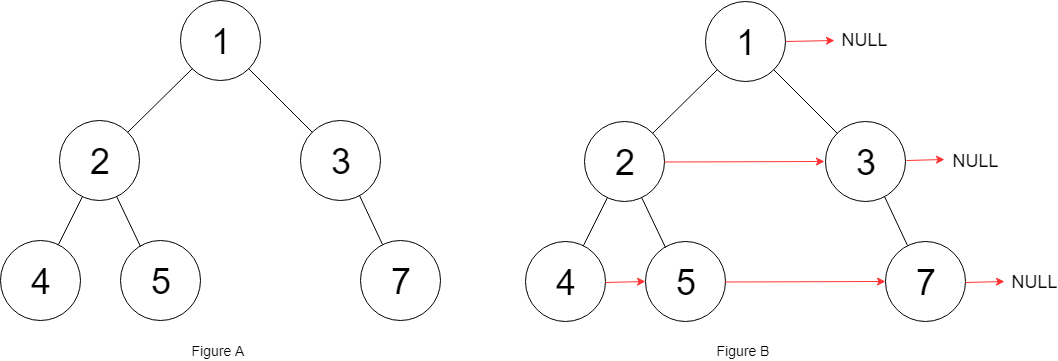
| 输入:root = [1,2,3,4,5,null,7]
输出:[1,#,2,3,#,4,5,7,#]
解释:给定二叉树如图 A 所示,你的函数应该填充它的每个 next 指针,以指向其下一个右侧节点,如图 B 所示。序列化输出按层序遍历顺序(由 next 指针连接),'#' 表示每层的末尾。
|
示例 2:
提示:
- 树中的节点数在范围
[0, 6000] 内
-100 <= Node.val <= 100
进阶:
- 你只能使用常量级额外空间。
- 使用递归解题也符合要求,本题中递归程序的隐式栈空间不计入额外空间复杂度。
题解一:DFS
使用数组记录每层的要连接的节点,数组下标表示层级,由于树的高度未知所以使用可变数组。
1
2
3
4
5
6
7
8
9
10
11
12
13
14
15
16
17
18
19
20
21
22
| class Solution {
List<Node> depthHead = new ArrayList<>();
public Node connect(Node root) {
dfs(root, 0);
return root;
}
public void dfs(Node node, int depth) {
if (node == null) {
return;
}
if (depth == depthHead.size()) {
depthHead.add(node);
} else {
depthHead.get(depth).next = node;
depthHead.set(depth, node);
}
dfs(node.left, depth + 1);
dfs(node.right, depth + 1);
}
}
|
题解二:BFS
由于是同深度间的连接,使用 BFS 具有天然的优势,只需将每次层级遍历的节点相连即可。
1
2
3
4
5
6
7
8
9
10
11
12
13
14
15
16
17
18
19
20
21
22
23
24
25
26
27
28
| class Solution {
Queue<Node> queue = new ArrayDeque<>();
public Node connect(Node root) {
if (root == null) {
return root;
}
queue.add(root);
while (!queue.isEmpty()) {
int n = queue.size();
Node pre = null;
for (int i = 0; i < n; i ++) {
Node cur = queue.poll();
if (pre != null) {
pre.next = cur;
}
pre = cur;
if (cur.left != null) {
queue.add(cur.left);
}
if (cur.right != null) {
queue.add(cur.right);
}
}
}
return root;
}
}
|
题解三:BFS + 链表
由于在 BFS 的过程中,我们实际上已经可以得到下一层的所有节点,那么我们可以直接对下一层进行连接,每一次 BFS 遍历的实际是已经连接好的链表。
1
2
3
4
5
6
7
8
9
10
11
12
13
14
15
16
17
18
19
20
21
22
23
24
| class Solution {
public Node connect(Node root) {
Node dummy = new Node();
Node cur = root;
while (cur != null) {
dummy.next = null;
Node nex = dummy;
while (cur != null) {
if (cur.left != null) {
nex.next = cur.left;
nex = cur.left;
}
if (cur.right != null) {
nex.next = cur.right;
nex = cur.right;
}
cur = cur.next;
}
cur = dummy.next;
}
return root;
}
}
|